Ready to refresh your home or business with professional painting?

Call Now

Exterior Paint Maintenance Checklist Before an Oregon Winter

Oregon winters bring wet weather, cool temperatures, and extended damp conditions. A short exterior check before the season changes can identify small paint and caulk problems before water has a chance to create larger repairs. Inspect painted surfaces closely Look at siding, trim, window casings, doors, decks, and railings. Watch for peeling paint, bare wood, … Continued

What Happens During a Professional Paint Consultation?

A professional paint consultation helps turn broad ideas into a clear plan. It gives you a chance to discuss the rooms, surfaces, colors, finish levels, preparation needs, and timing before the project begins. Review the rooms and the condition of surfaces The consultation typically begins with a walkthrough. You can point out stains, cracks, peeling … Continued

When Should You Repaint a Garage Door?

A garage door is one of the largest visible surfaces on a home. It faces daily use, changing weather, vehicle exhaust, dust, and direct sun, so a faded or peeling finish can affect curb appeal quickly. Know the signs it is time to repaint Fading color, chalky residue, peeling paint, cracks around panels, rust spots … Continued

Best Durable Paint for Kitchens and Bathrooms

Kitchens and bathrooms place more demands on paint than most rooms. Steam, moisture, grease, splashes, frequent cleaning, and regular touching all affect how well a finish performs. Start with clean, sound surfaces In kitchens, walls near cooking areas collect oil and food residue. In bathrooms, showers and poor ventilation can create repeated moisture exposure. Thorough … Continued

When Is It Too Late to Paint Outside in Oregon?

In Oregon, the end of exterior painting season depends more on weather conditions than a specific calendar date. Cool temperatures, wet surfaces, short drying windows, and overnight dew can make a project risky even when an afternoon looks clear. Check air and surface temperatures Exterior coatings have manufacturer temperature limits. The temperature of siding, trim, … Continued

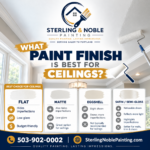
What Paint Finish Is Best for Ceilings?

Ceilings are often painted with a flat finish because it minimizes glare and helps disguise small surface imperfections. A quality ceiling coating can make a room feel cleaner and more finished without drawing attention overhead. Why flat paint is the common choice Flat and matte finishes absorb light instead of reflecting it. That makes them … Continued

Best Paint Colors for North-Facing Rooms

North-facing rooms receive cooler, indirect light for much of the day. That light can make a color appear grayer, bluer, or flatter than it looked in a store, so choosing paint starts with understanding the actual room. Start with the room’s light Look at the room in the morning, afternoon, and evening. Note how much … Continued

Is Cabinet Painting Worth It?

Cabinet painting can be a practical way to update a dated kitchen or bathroom without the cost and disruption of a full cabinet replacement. Whether it is worth it depends on the condition of the cabinets, how much preparation they need, and the level of durability you expect from the finished surface. For many homeowners, … Continued
When Should You Repair Drywall Before Painting? - Sterling Noble Painting

When Should You Repair Drywall Before Painting?

Quick answer: Drywall damage should be repaired before painting whenever holes, open cracks, loose tape, dents, stains, or rough patches would remain visible through the finish. Paint changes color and sheen; it does not level a damaged wall. A good repair is filled, allowed to dry, sanded smooth, dusted, and primed as needed. Recurring cracks … Continued
How to Protect Floors During Interior Painting - Sterling Noble Painting

How to Protect Floors During Interior Painting

Quick answer: Professional floor protection starts with the right covering for each surface. Hard floors, carpet, stairs, and transitions may require different materials and secure edges. Furniture should be moved or covered, and pathways should be planned to limit tracking. Protection also includes careful masking, organized tools, controlled cleanup, and prompt attention to spills. These … Continued

How Long Does Interior Paint Need to Dry?

Quick answer: Paint may feel dry within hours, but full curing takes longer. Drying means the surface is no longer wet; curing means the coating has developed more of its intended hardness and durability. Temperature, humidity, ventilation, product type, color, and film thickness all affect timing. Follow the manufacturer’s recoat and cure guidance, and avoid … Continued